The Best Design Decisions Are Often the Ones You Never Notice
Luxury is often defined by what we see. Some of the most thoughtful homes are shaped by decisions we only appreciate after living in them.
By Claire Sullivan
Beautiful homes are easy to photograph. Thoughtful homes can be harder to explain.
We tend to notice the obvious things first. The stone, the cabinetry, the lighting, the fixtures and the furniture all contribute to our first impression of a space. They are also the elements most likely to appear in photographs, design magazines and social media. But some of the decisions that have the greatest effect on how a home feels are considerably less visible.
You often do not appreciate them until you live there.
A primary bathroom is a good example. It can be beautifully finished, generously sized and filled with expensive materials, yet still overlook something as basic as privacy. In a large primary suite, a separate water closet with a door might seem like a relatively minor planning decision. In everyday life, it can make an enormous difference. In some larger homes, separate water closets for each person take that idea even further. It is not necessarily about extravagance. It is about recognizing that two people sharing a space do not always share the same routine.
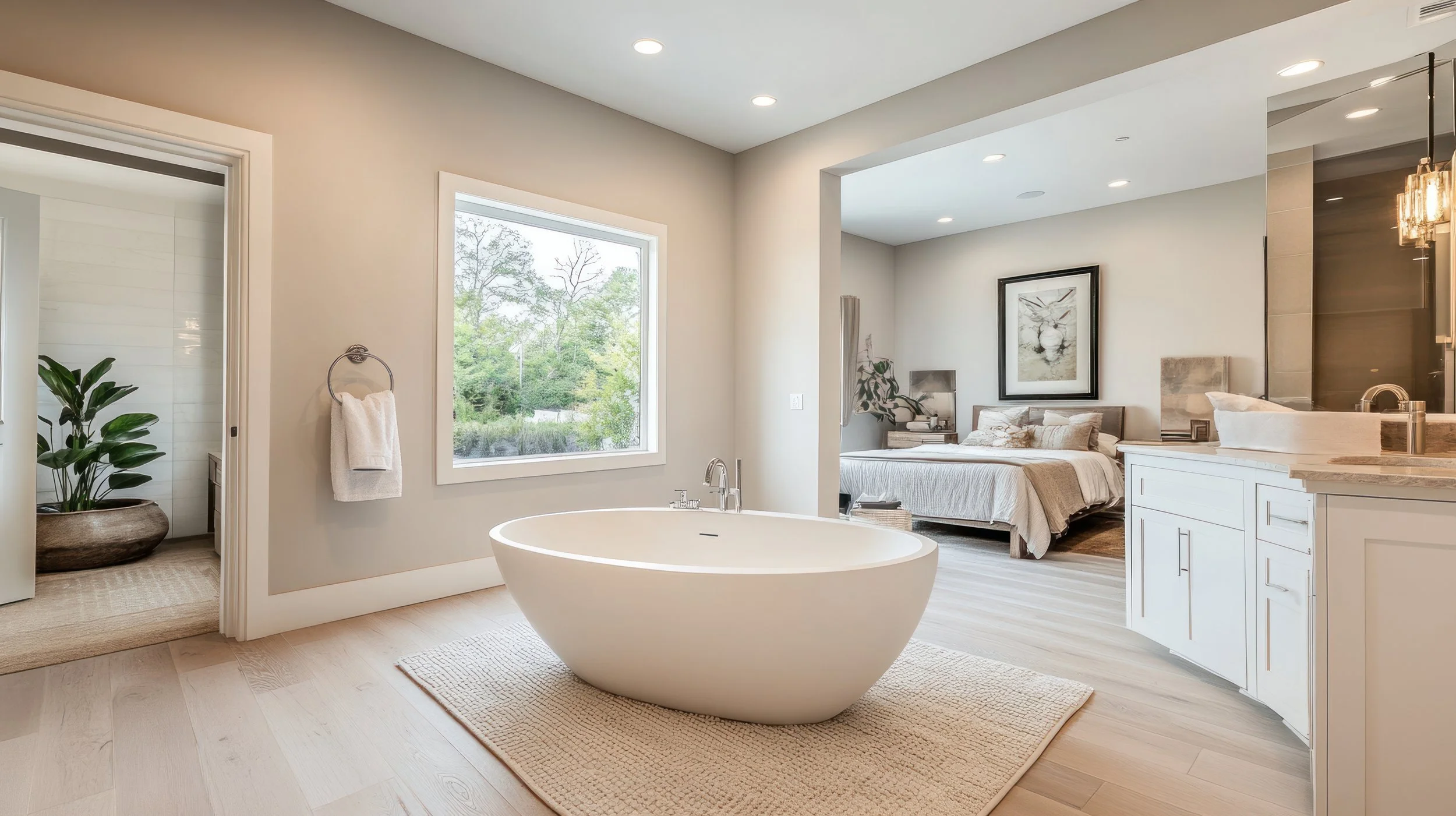
The relationship between the primary bedroom and bathroom presents another example. Open sightlines can look beautiful in photographs, particularly when the bathroom has dramatic lighting or a striking freestanding tub. But imagine one person getting ready for work at 5:30 in the morning while the other would like to sleep for another hour. Suddenly the placement of a doorway, the direction it faces, and whether light and sound can be contained become far more important than they appeared on the floor plan.
These are small decisions until they are experienced every day.
Good residential design requires imagining those moments before they happen. Where does someone put a phone at night? Can one person use the bathroom without waking the other? Is there enough counter space for two people getting ready at the same time? Are electrical outlets located where they are actually needed? Can a bathroom door close without interfering with another door, cabinet or circulation path?
None of these questions are particularly glamorous. Yet collectively, their answers determine whether a beautiful room is also an effortless one.
The same thinking extends throughout a home. A kitchen can have exquisite cabinetry but frustrate its owners if the refrigerator interrupts the primary work area. A laundry room can be beautifully designed but feel inadequate if there is nowhere to set down a basket or hang something that should not go into the dryer. A dramatic entry can make a wonderful first impression while offering nowhere convenient to put the things people actually carry through the door every day.
This is where I think some residential design gets caught between creating a photograph and creating a home.
There is nothing wrong with wanting a room to be beautiful. Beauty matters. Materials matter. Proportion, color and craftsmanship matter. But the best interiors do not force us to choose between beauty and function. They make the practical decisions so thoughtfully that we barely notice them.
In fact, some of the most luxurious details in a home may be the ones a guest never sees.
A door positioned in exactly the right place. Lighting that allows one person to move through a room without disturbing another. Storage located where something is actually used. Privacy where privacy matters. A room that accommodates two different routines without either person having to adjust to the architecture.
These details rarely become the centerpiece of a photograph. They probably will not be mentioned in a property description. Most visitors will never know why the house feels comfortable.
But the people who live there will.
Perhaps that is one of the quieter measures of good design. Not simply whether a home makes an impression when you first walk through it, but whether, months or years later, you continue discovering small ways in which someone thought about how you would actually live there.
The most thoughtful design does not constantly call attention to itself.
Sometimes, it simply makes life easier.