The Opportunity Hidden In An Uncertain Market
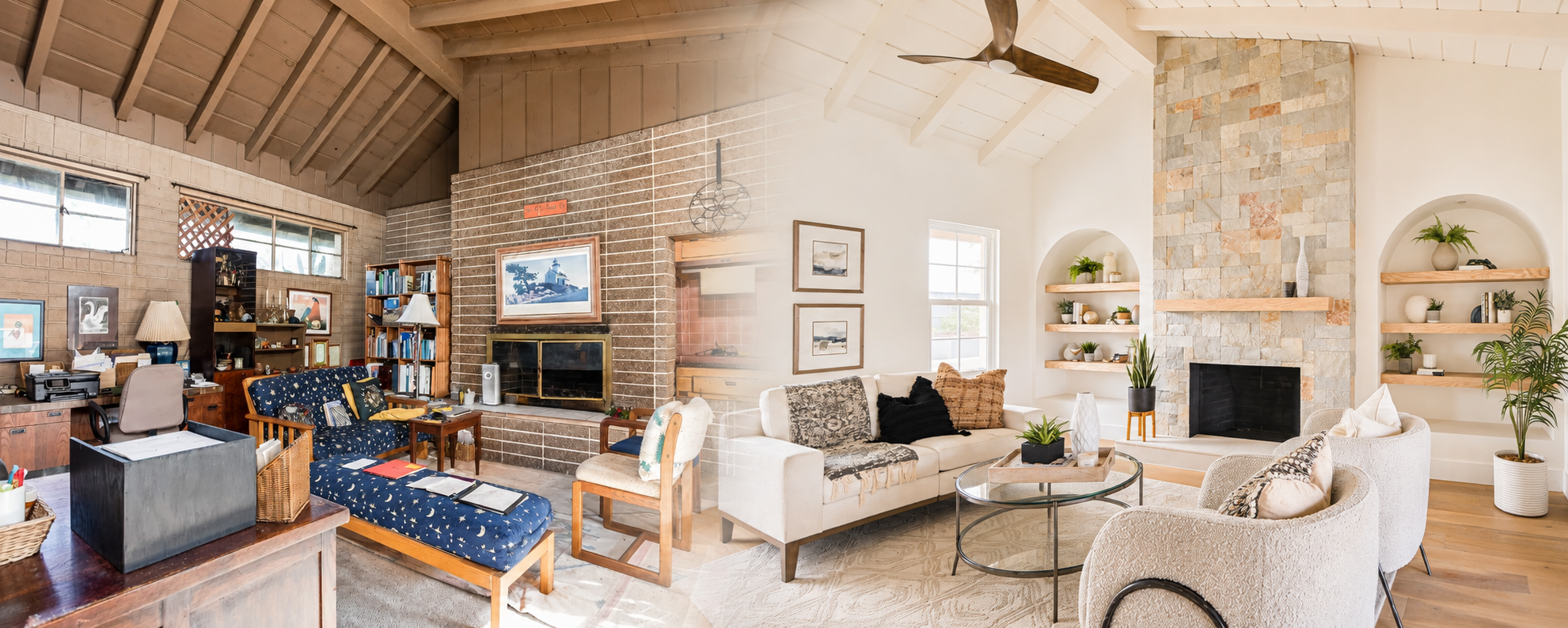
Higher rates have made buyers more selective. For a developer, that can make the right unfinished property even more interesting.
There is a lot of conversation in real estate right now about when interest rates will finally come down. I pay attention to it too. Interest rates affect affordability, buyer confidence, holding costs and ultimately the value of every project we consider. But I've also learned over the years that building an investment strategy around predicting interest rates is a pretty difficult way to make decisions. I'd rather concentrate on something I understand better: the property.
As we look toward 2027, that is exactly what we're doing at URBN. We're not changing direction because the market has become more complicated. If anything, the current market is reinforcing why we've been focused on the type of properties we have. The average 30-year mortgage rate was 7.03% as of September 26, 2026. In San Diego County, the median home price was still approximately $962,000 in August, up 5.7% from a year earlier. At the same time, pending sales were down 13%. I think that combination tells an interesting story. Buyers haven't disappeared. They've become more selective.
When money becomes more expensive, it gets harder to overlook the things that are wrong with a house. An awkward floor plan matters more. A kitchen that needs to be replaced matters more. Deferred maintenance matters more. Taking on a major renovation after purchasing an already expensive home becomes a much bigger decision. That creates an interesting dynamic for a developer. The outdated home that many buyers see as a collection of problems may be the exact property I'm interested in looking at. Not because the problems don't matter, but because solving those problems is where much of the value can be created. When I walk one of these properties, I'm rarely looking only at what is there. I'm looking at what isn't there yet. Can the floor plan be opened up? Is there a better relationship between the kitchen and living areas? Can we improve the connection to the backyard? Is there unused square footage? Can the primary suite become something substantially better? Does the architecture give us something worth preserving and building around? And then comes the most important question: if we solve those things correctly, will the market value what we've created? That's the part of development I enjoy most. It is also why I think the upper end of the San Diego market remains particularly interesting.
Recent data showed the luxury segment at a median price of approximately $3.78 million, with sales volume up 23.9% year over year even with mortgage rates around 7%.
That doesn't mean higher-income buyers don't care about interest rates. They absolutely do. But many are coming into a purchase with substantial equity, larger down payments or other liquidity. Their decision can therefore be influenced more heavily by the property itself. And that changes the conversation.
For that buyer, the right location matters. Architecture matters. Privacy matters. Natural light matters. The kitchen matters. The primary suite matters. How the house flows and how it feels to live there matter. Perhaps most importantly, certainty matters. A finished home allows someone to walk through the front door and understand exactly what they're buying. They don't have to imagine the renovation, find the contractor, establish a budget, live through the work and hope the finished product turns out the way they envisioned. We've already taken on that uncertainty. That is where I believe our opportunity sits. It doesn't mean simply buying more expensive houses. In fact, I think that can be a dangerous conclusion to draw from the luxury data.
The buyer pool gets considerably thinner as prices move higher. Recent San Diego data estimated market time at roughly 120 days between $2 million and $4 million, compared with approximately 443 days above $6 million. So our goal isn't to chase the highest possible sale price. It's to find the right property, in the right location, at the right basis, where there is enough opportunity between what we're buying and what we believe we can responsibly create. For us, that has generally kept the finished value of many of the opportunities we're evaluating somewhere around the $2.5 million to $4.5 million range. It isn't a rule. Every property has to stand on its own. But it is an area where I believe our experience in real estate, renovation and development can be particularly valuable. And we're going to remain conservative.
If mortgage rates decline in 2027, great. Lower rates could improve affordability and bring additional buyers into the market. But I don't want to buy a property today because I need that to happen tomorrow. The deal should make sense based on the conditions we can reasonably see today. That means buying correctly. Understanding the renovation before we start. Knowing the realistic ceiling of the neighborhood. Leaving room for things to go wrong. And creating a finished product that gives the eventual buyer a compelling reason to choose our home over everything else available.
I've spent enough years doing this to know that we won't predict every turn in the market correctly. Fortunately, I don't think we need to. We need to understand the property in front of us, recognize the problems we know how to solve, and remain disciplined enough to walk away when the opportunity isn't there. Markets will change. Interest rates will change. Buyer psychology will change. Our job is to create value anyway.