Sometimes the biggest opportunity in a property is not what needs to be added. It is recognizing what needs to be changed.
By Mitch Smith | URBN Founder
A few years ago, we began watching a house in a coastal neighborhood we knew extremely well. It was a great property in many respects. It sat on a corner lot, was close to the ocean, and was located in a neighborhood where renovated homes were in strong demand.
The house itself wasn't in terrible condition. In fact, it was completely livable. But something about it wasn't connecting with buyers.
It originally came to market at approximately $2.4 million.
We had recently completed and sold another home just around the corner for $2.71 million. Because it was our own project, we knew that comparable particularly well. We understood what buyers had responded to, what the renovation had cost, and perhaps most importantly, what the neighborhood could support for the right finished property.
So we watched this one closely. The price dropped from $2.4 million to $2.3 million. Eventually it dropped again to $2.2 million. Still, buyers weren't stepping forward.
The more time I spent thinking about the property, the more convinced I became that the problem wasn't really its condition.
It was the way the house lived.
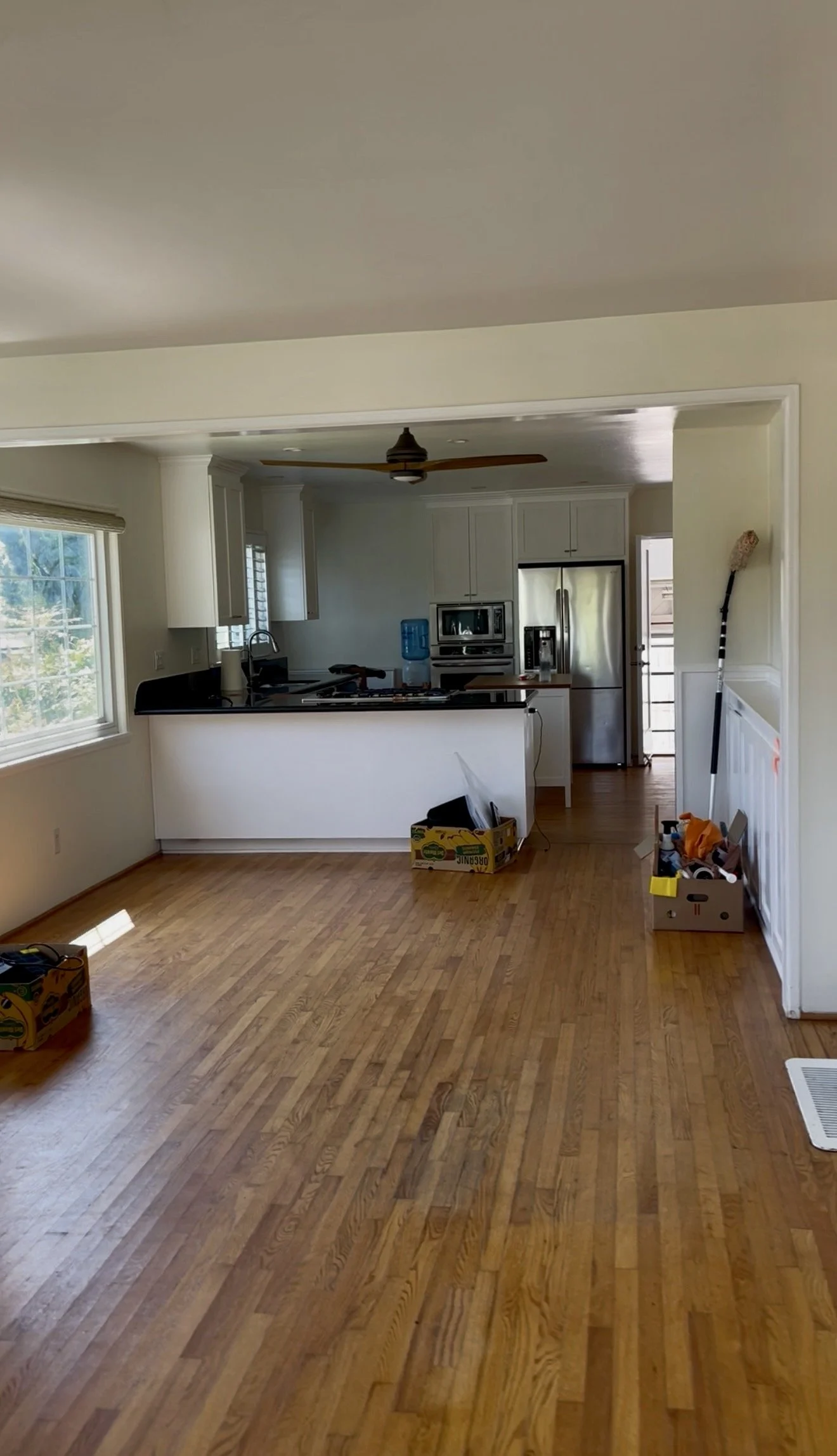
The house didn't flow.
The Quality Buyers Feel Before They Can Explain It
Flow is one of the most overlooked characteristics in residential real estate.
It doesn't appear on a listing sheet. There is no line for it next to square footage, bedroom count or lot size. Yet I believe it can have an enormous influence on the way buyers respond to a home.
We've all experienced it. You walk into a house with plenty of square footage and all the necessary rooms, but something doesn't feel right. The kitchen feels disconnected from the living areas. Rooms don't relate naturally to one another. A hallway consumes too much space. The backyard may be only a few feet away, but somehow the house feels separated from it.
Most buyers aren't going to leave a showing talking about poor spatial relationships. They're simply going to say they didn't like the house.
That's essentially what was happening with this property.
And to be fair, I understood the reaction. At that price point, buyers should be selective. The difference was that we weren't evaluating the property solely for what it was at that moment.
We were trying to understand what it could become.
Seeing Something Different at $1.9 Million
As the property continued to sit, we eventually made an offer at $1.9 million.
The sellers initially declined and decided to keep the house on the market. We were comfortable waiting because, from our perspective, the opportunity only worked at the right price.
Eventually, they came back to us, and we purchased the home for $1.9 million.
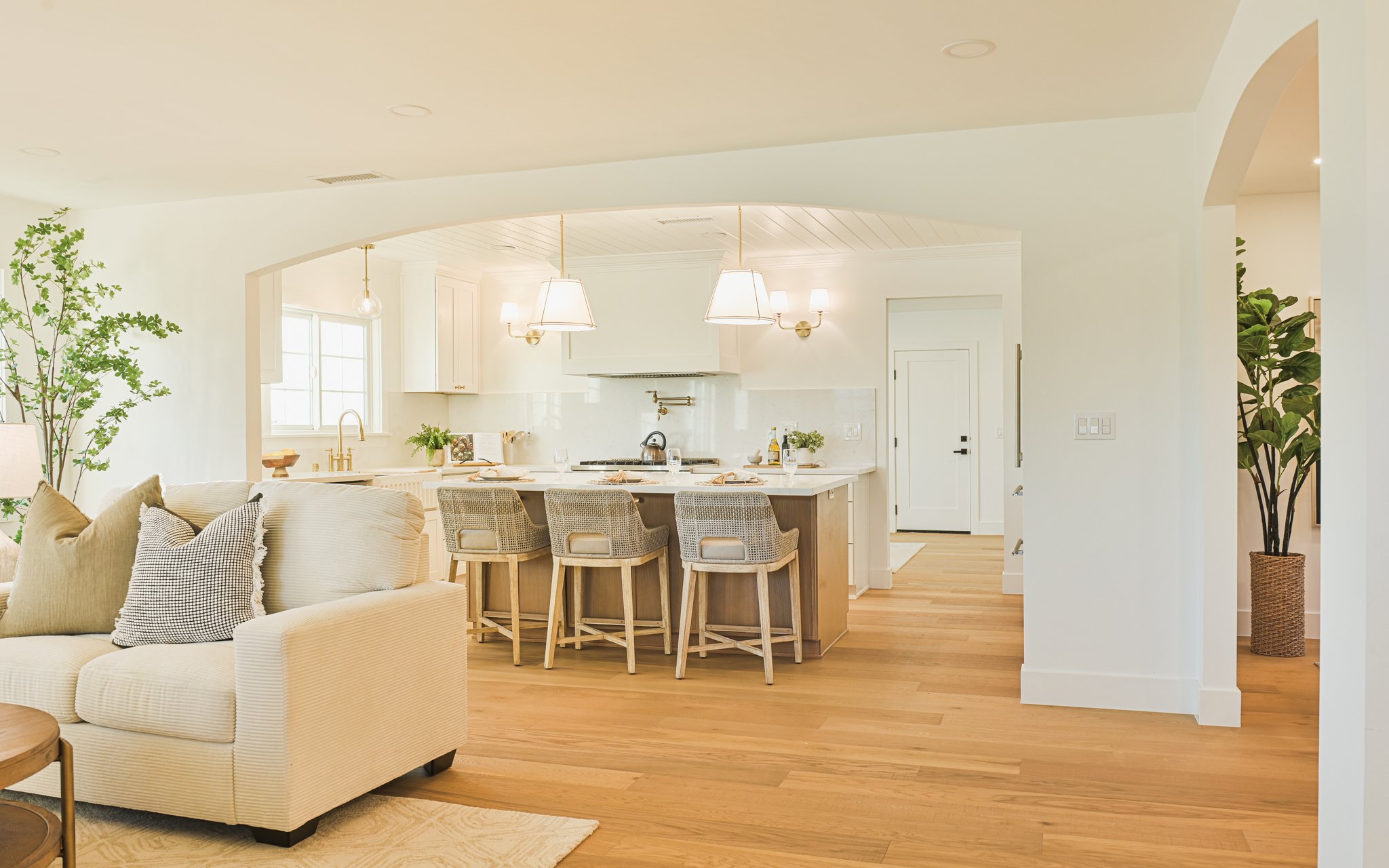
From there, our focus wasn't simply on updating the finishes. We gutted the interior and reconsidered the way the spaces related to one another. The renovation was designed around creating better flow and making the home function more naturally for the way people actually live.
What is interesting is how many of the property's most valuable characteristics were already there.
We didn't change the neighborhood. We didn't change the corner lot. We didn't move the house closer to the ocean.
Those advantages existed when the house was sitting on the market.
Our job was to recognize them and unlock the potential around them.
We ultimately invested approximately $350,000 into the renovation. When the project was completed, we sold the property for approximately $2.7 million.
The property hadn't changed locations. Its fundamental characteristics hadn't changed.
But the experience of the house had.
The Part of the Story That Stayed With Me
There is another part of this project that I find particularly interesting.
After purchasing the property for $1.9 million, we had a prospective buyer who considered purchasing it from us for approximately $2.1 million before we completed the renovation ourselves.
The idea was fairly straightforward. We would sell them the property and could then help guide the renovation.
Had they purchased it for approximately $2.1 million and invested around $300,000 into the renovation, they would have been roughly $2.4 million into a property that ultimately demonstrated a finished market value of approximately $2.7 million.
Of course, real estate never comes with guaranteed outcomes. Construction costs change, unforeseen conditions arise and markets move. Every property and every project needs to be evaluated independently.
But the potential was there.
Ultimately, the buyer couldn't quite see the finished home clearly enough to make the leap. I understand that hesitation. Over the years, I've heard some version of the same comment after completing many of our projects:
“If I could have seen what it was going to become, I would have bought it.”
That comment has always stayed with me because the opportunity was there from the beginning.
What was missing wasn't the potential.
It was the ability to visualize it.
The Premium We Pay for Certainty
That experience reinforced something I've come to believe about beautifully renovated homes.
When buyers purchase a finished property, they're obviously paying for the home and the improvements. But they're also paying for something less tangible.
They're paying for certainty.
Someone has already looked at the original floor plan and determined what needed to change. Someone figured out how the kitchen should relate to the living spaces. Someone decided where to invest money and, just as importantly, where not to invest it.
Someone took the risk while the outcome was still uncertain.
By the time that home returns to the market, the difficult decisions have been made. Buyers can walk through the front door and immediately understand what they're purchasing.
There is real value in that. But there is usually a premium attached to it as well.
This is why I think buyers who can look beyond a property's current condition sometimes have an advantage. They may have an opportunity to create some of the value themselves rather than purchasing it after someone else has already created it.
Flow May Be the Forgotten Advantage
This project also reinforced how important flow has become in the way I evaluate homes.
Real estate tends to put tremendous emphasis on square footage. Bigger is often assumed to be better.
In my experience, that isn't always the case.
I've walked through 2,000 square foot homes that feel remarkably generous and 3,000 square foot homes that somehow feel cramped. The difference is often not the amount of space. It is how effectively that space is being used.
Where does your eye go when you enter the home? How does the kitchen relate to the living areas? Where will people naturally gather? How easily does the interior connect to the backyard? Are there rooms consuming valuable square footage that no longer serve much purpose?
These are questions we think about constantly when evaluating a property.
Sometimes removing the right wall improves several spaces at once. Reorienting a kitchen can completely change the relationship between the interior and the backyard. An underused room may be incorporated into another space and make the entire home feel larger.
None of those changes necessarily require adding square footage.
That's why one of the things we consider when evaluating a home isn't simply how much square footage it has.
We look at what the square footage is doing.
Sometimes the smartest renovation isn't making a house bigger. It's making the existing house live better.
A Fixer and an Opportunity Are Not the Same Thing
None of this means every property that needs renovation represents an opportunity.
Some houses have problems that are difficult or expensive to overcome. The location may be compromised. The lot may be challenging. There may be structural limitations. Or the cost of completing the renovation may simply exceed what the surrounding market will support.
The numbers still have to make sense.
In my experience, the most interesting opportunities are often good properties with solvable problems.
There is an important difference between buying a fixer and recognizing a fundamentally good property that simply isn't being used to its full potential.
A dated kitchen can be changed. Flooring can be changed. Landscaping can be changed. Many floor plans can be changed.
Location is considerably harder.
So is the neighborhood.
Over time, we've learned to spend less time being distracted by things that are relatively easy to change and more time evaluating the characteristics we cannot change.
That is often where the underlying value of a property begins.
Learning to Look at a Property Twice
When I walk through a property today, I try to look at it twice.
The first time, I see what everyone else sees. I notice the kitchen, the bathrooms, the flooring, the furniture and the way the house is currently being used.
Then I try to mentally strip those things away.
The second time, I'm looking at the property differently.
Where is the natural light? How does the home sit on the lot? Where will people naturally gather? Which spaces aren't working? What would happen if a wall disappeared? Could the house connect to the backyard differently? Is the home actually too small, or does it simply feel small because the existing square footage isn't being used well?
Then comes the question that matters just as much as the design:
If we solve those problems, will the market reward us for doing it?
That is what separates seeing potential from simply imagining possibilities.
The house we purchased for $1.9 million had been sitting there the entire time. The neighborhood hadn't changed. The corner lot hadn't changed. The proximity to the ocean hadn't changed. Most of the ingredients that ultimately made the property desirable were already there.
What changed was our perspective on what the house could become and our willingness to act on it.
That's why, after years of developing homes, I've become less interested in whether a property impresses me the first time I walk through the door.
I'm much more interested in a different question:
What are we seeing that everyone else is looking past?
Sometimes the best opportunities in real estate aren't hidden at all.
They're simply waiting for someone to see them differently.